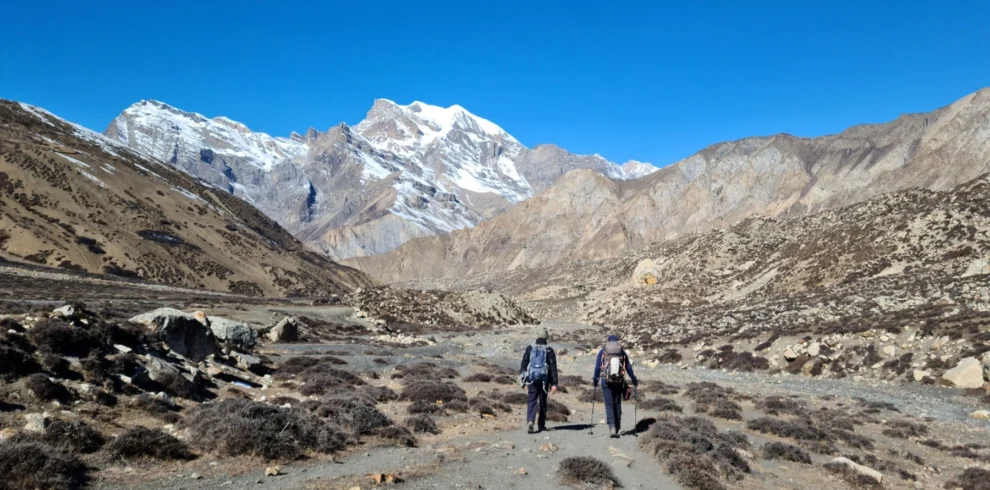
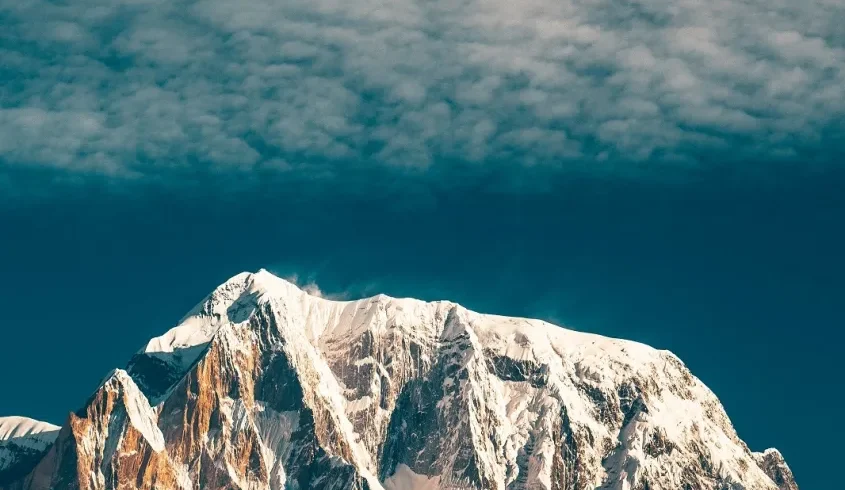
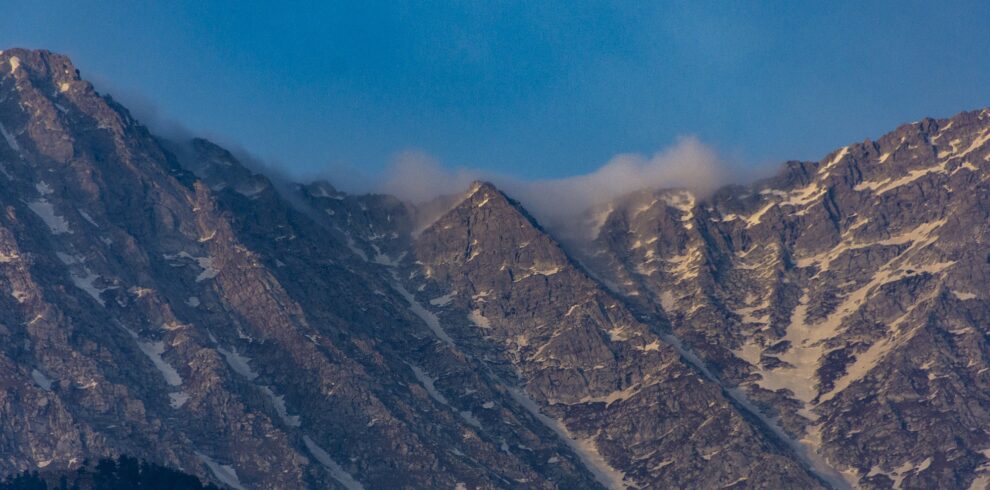
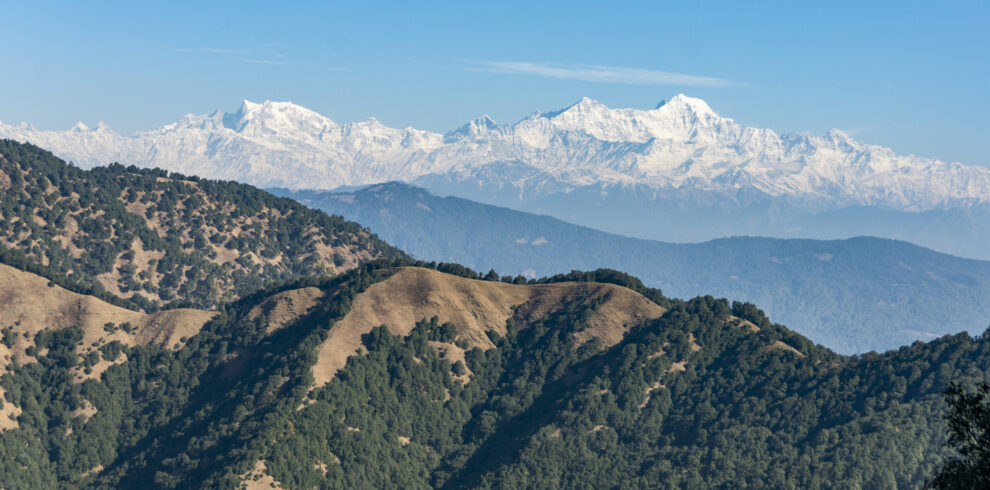
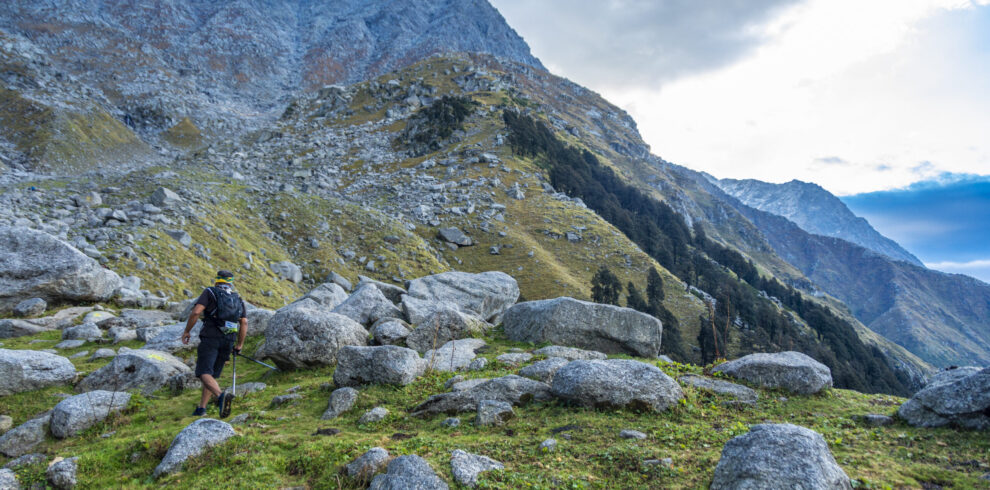
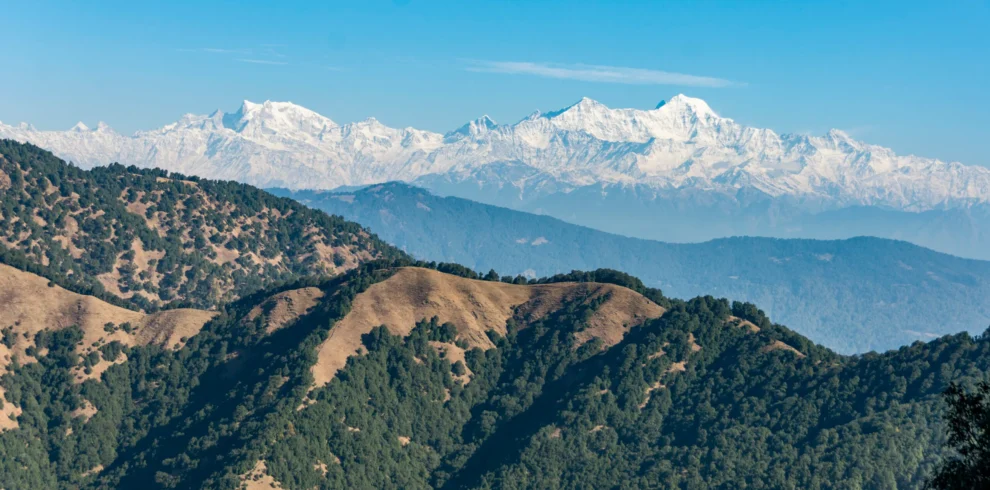
The Manaslu Circuit Trek is one of Nepal’s most rewarding high-altitude trekking routes, taking you around Mount Manaslu (8,163 m), the world’s eighth-highest mountain. Far less frequented than some of Nepal’s more popular trekking trails, the route offers a remarkable combination of dramatic Himalayan landscapes, remote mountain villages, and rich Tibetan Buddhist culture.
The trail follows river valleys, crosses suspension bridges, passes through traditional settlements and gradually climbs into the high-altitude landscapes of the Manaslu region. Along the way, trekkers experience changing terrain, spectacular mountain views, ancient monasteries, and the distinctive culture of the region.
The major challenge is crossing Larkya La Pass (approximately 5,106 m). This demanding section involves a long day of walking at high altitude, often over rocky and potentially snow-covered terrain. Good physical fitness, previous high-altitude trekking experience, and proper acclimatisation are essential.
The Manaslu Circuit is best suited to experienced trekkers looking for a remote Himalayan adventure that combines physical challenge, cultural exploration, and outstanding mountain scenery.
Note: Prices mentioned are applicable for Indian passport holders. For foreign passport holders, the cost may vary. Please connect with the Boots & Crampons team for clarity.
Note: An indemnity document will be shared before the trek. Signing it is mandatory.
Upon arrival at Tribhuvan International Airport in Kathmandu, our representative will welcome you and transfer you to your hotel. After checking in and resting, meet your trekking guide for a briefing covering the route, safety guidelines, permits, and equipment requirements. Spend the remainder of the day exploring the city or completing last-minute shopping and preparations.
Overnight: Hotel in Kathmandu.
After breakfast, begin the journey from Kathmandu towards Soti Khola, the starting point of the Manaslu Circuit Trek. The drive passes through river valleys, terraced fields, small settlements, and winding mountain roads. Road conditions can vary, so the journey may take longer than expected.
Driving distance: Approximately 140–160 km
Driving duration: Approximately 7–8 hours
Overnight: Lodge in Soti Khola.
Begin trekking along the Budhi Gandaki River, passing through forested trails, small settlements, rocky sections, and suspension bridges. The route includes undulating terrain and several ascents and descents before reaching Machha Khola.
Trekking distance: Approximately 14–16 km
Trekking duration: Approximately 6–7 hours
Overnight: Machha Khola.
Continue along the Budhi Gandaki River through narrow valleys, forested sections, and traditional villages. The trail crosses suspension bridges and follows a combination of stone steps and uneven paths before reaching Jagat, an important settlement along the route.
Trekking distance: Approximately 18–22 km
Trekking duration: Approximately 7–9 hours
Overnight: Jagat.
Today’s trail gradually gains altitude as you continue deeper into the Manaslu region. Pass through small villages, cultivated fields, and forested sections while experiencing the changing landscape and local culture. Continue towards Pewa, in the Deng region.
Trekking distance: Approximately 16–19 km
Trekking duration: Approximately 7 hours
Overnight: Lodge in Pewa.
Continue along the Budhi Gandaki Valley, crossing suspension bridges and passing through traditional settlements surrounded by forests and mountain scenery. As the trail gains altitude, the landscape gradually changes, with increasing views of the Himalayan peaks.
Arrive at Namrung, a traditional mountain village and an important stop on the Manaslu Circuit.
Trekking distance: Approximately 15–17 km
Trekking duration: Approximately 7 hours
Overnight: Lodge in Namrung.
Today’s walk takes you through beautiful mountain villages, stone houses, cultivated fields, and forested trails. As you approach Lho, the landscape opens up to impressive views of Mount Manaslu and the surrounding peaks, weather permitting.
Lho is known for its traditional Tibetan Buddhist culture and monastery.
Trekking distance: Approximately 9–11 km
Trekking duration: Approximately 4-6 hours
Overnight: Lodge in Lho.
Continue towards Sama Gaun, one of the major settlements in the upper Manaslu region. The trail passes through alpine landscapes and traditional villages, with increasingly expansive views of Mount Manaslu and the surrounding mountains.
As you gain altitude, maintain a steady pace and drink water regularly.
Trekking distance: Approximately 15–17 km
Trekking duration: Approximately 5–7 hours
Overnight: Lodge in Sama Gaun.
Spend the day acclimatising to the higher altitude before continuing towards Samdo and Larkya La Pass. Depending on weather, fitness, and trail conditions, you may undertake an acclimatisation hike towards Pungyen Gompa or Manaslu Base Camp.
Both options offer remarkable views of the surrounding mountains and glaciers. The Manaslu Base Camp hike is more demanding, so the day’s objective should be decided with your guide according to the group’s condition.
Trekking duration: Approximately 5–7 hours for an acclimatisation hike; the Manaslu Base Camp option may take longer.
Overnight: Sama Gaun.
After breakfast, continue towards Samdo along a trail that gradually climbs through high-altitude terrain. The route passes open valleys and yak pastures, with impressive views of the surrounding mountains.
Although the walking distance is relatively short, the increasing altitude makes it important to walk slowly and steadily.
Trekking distance: Approximately 8–10 km
Trekking duration: Approximately 3–5 hours
Overnight: Samdo.
Today’s trek takes you closer to Larkya La Pass. Follow the trail through barren high-altitude landscapes, crossing streams and rocky sections as you gradually gain elevation. The surroundings become increasingly rugged as you approach Dharmasala, also known as Larkya Phedi.
Upon arrival, rest, hydrate, and prepare for the following day’s challenging pass crossing. Accommodation and facilities here are basic.
Trekking distance: Approximately 10–12 km
Trekking duration: Approximately 5–6 hours
Overnight: Dharmasala.
Start early for the most demanding day of the trek. Ascend gradually towards Larkya La Pass, the highest point of the Manaslu Circuit at 5,106 metres. The route involves a long climb over high-altitude terrain, with possible snow, ice, and strong winds depending on the season.
From the pass, enjoy panoramic views of the surrounding Himalayan peaks before beginning the long descent towards Bimthang. This is a strenuous day requiring good fitness, careful pacing, and favourable conditions.
Highest point: Larkya La Pass – 5,106 m
Trekking distance: Approximately 15–18 km
Trekking duration: Approximately 8–10 hours
Overnight: Bimthang.
After breakfast, descend from Bimthang towards Dharapani. The trail passes through alpine meadows, forested sections, river crossings, and small settlements as the landscape gradually becomes greener at lower elevations.
The descent can be demanding on the knees after the previous day’s pass crossing. Take your time and follow your guide’s instructions along uneven sections of the trail.
Trekking distance: Approximately 18–22 km
Trekking duration: Approximately 7–9 hours
Overnight: Dharapani.
After breakfast, begin the return journey to Kathmandu by road. The drive follows mountain roads and river valleys before reaching the capital. Road conditions, traffic, and possible delays can affect the total travel time.
Driving duration: Approximately 9–11 hours, depending on road conditions
Overnight: Hotel in Kathmandu.
After breakfast, check out from the hotel and transfer to Tribhuvan International Airport for your onward journey. Your Manaslu Circuit Trek concludes with memories of remote Himalayan villages, spectacular mountain scenery, and the challenging crossing of Larkya La Pass.
2 nights’ accommodation in Kathmandu at a 4-star category hotel on a twin-sharing basis with breakfast.
Best available teahouse or lodge accommodation during the trek, on a twin-sharing basis wherever possible.
Breakfast, lunch, and dinner throughout the trekking period.
Standard menu meals at teahouses. Special food orders and additional personal purchases are chargeable separately.
Airport pick-up and drop-off in Kathmandu.
Ground transportation as specified in the itinerary, including transfers between Kathmandu and the trek’s starting and ending points.
Required Manaslu restricted-area trekking permits.
Annapurna Conservation Area Permit (ACAP) and other applicable conservation-area or local entry permits, as required by the confirmed route.
Applicable government taxes and permit-related administrative charges included in the package.
Experienced, English-speaking trekking guide, including salary, accommodation, meals, and insurance.
Porter support for carrying personal luggage, up to 10 kg per participant.
Insurance coverage for the Nepali trekking staff.
Trek coordination and logistical support from the Boots & Crampons team.
Access to drinking water at teahouses and designated stops, subject to availability and local charges.
Participants are advised to carry a personal water filter or suitable purification tablets.
Pre-trek briefing covering the itinerary, equipment, safety, and altitude awareness.
Exclusive participant discount on Fast&Up nutrition products.
Coordination and support from the Boots & Crampons team before and during the trek.
International airfare to and from Nepal.
Nepal visa fees and associated expenses.
Any travel costs between the participant’s hometown and the departure airport.
Lunch and dinner in Kathmandu.
Additional meals outside the trekking package or beyond those specified in the itinerary.
Personal travel insurance covering high-altitude trekking, emergency medical treatment, hospitalisation, and evacuation or helicopter rescue.
Emergency evacuation and rescue expenses, if required.
Personal medical expenses and medication.
Bottled water, beverages, alcoholic drinks, and specialty drinks.
Snacks, desserts, and personal food purchases beyond the standard included meals.
Phone calls, internet usage, battery charging, laundry, and hot showers.
Souvenirs and other personal purchases.
Personal trekking clothing, footwear, backpack, and other equipment.
Sleeping bag and down jacket.
Trekking poles and personal accessories.
Rental charges for equipment, if required.
Sleeping bags and down jackets may be available for hire, subject to availability and additional charges.
Tips and gratuities for trekking guides, porters, drivers, and other support staff. Tips are Mandatory.
Additional accommodation, meals, or transportation resulting from weather delays, road closures, natural disasters, or other unforeseen circumstances.
Expenses arising from changes to the itinerary due to safety concerns, medical conditions, or early descent.
Additional services or transfers not specified in the itinerary.
Costs arising from personal requests or changes to the planned arrangements.
Any service, activity, facility, or expense not explicitly mentioned in the Inclusions section is excluded from the package.
Follow a structured fitness routine for at least 2–3 months before the trek.
Build cardiovascular endurance through brisk walking, jogging, cycling, or other sustained aerobic activities.
Gradually increase the duration of your training hikes to prepare for consecutive days on the trail.
Practise uphill walking and stair climbing to improve endurance on ascents and descents.
Include lower-body strength exercises such as squats, lunges, and step-ups.
Strengthen your core through exercises such as planks and controlled stability movements.
Practise walking with a loaded backpack, gradually increasing the weight to match your expected trekking load.
Prepare for long walking days, particularly the crossing of Larkya La Pass, which may require approximately 8–10 hours or longer depending on conditions.
Previous high-altitude trekking experience is strongly recommended.
Participants should be comfortable walking for several consecutive days over uneven terrain, steep trails, and rocky sections.
Be prepared for basic mountain accommodation and limited facilities in remote settlements.
Follow the itinerary’s acclimatisation plan and maintain a steady pace as altitude increases.
Learn to recognise symptoms of altitude sickness, including persistent headache, nausea, dizziness, unusual fatigue, and breathlessness at rest.
Inform your guide immediately if you feel unwell. Do not continue ascending if altitude sickness is suspected.
Follow your guide’s instructions regarding rest, ascent, descent, and safety decisions.
Be prepared for changing weather, basic facilities, long walking days, and unexpected itinerary adjustments.
Maintain patience and a flexible attitude when dealing with road delays or trail conditions.
Prioritise safety over reaching a particular destination or completing the trek on schedule.
Carry suitable trekking boots that have been broken in before departure.
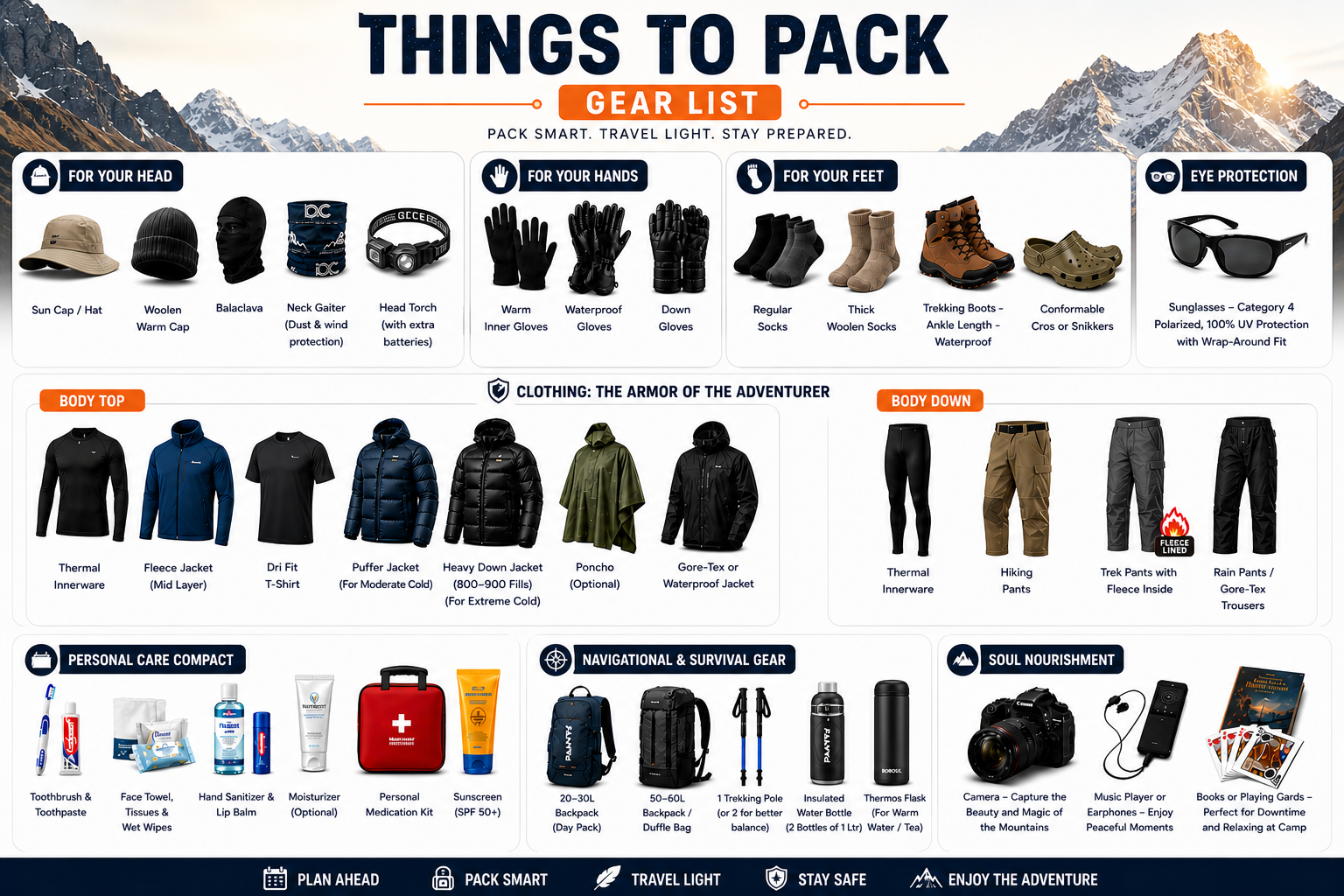
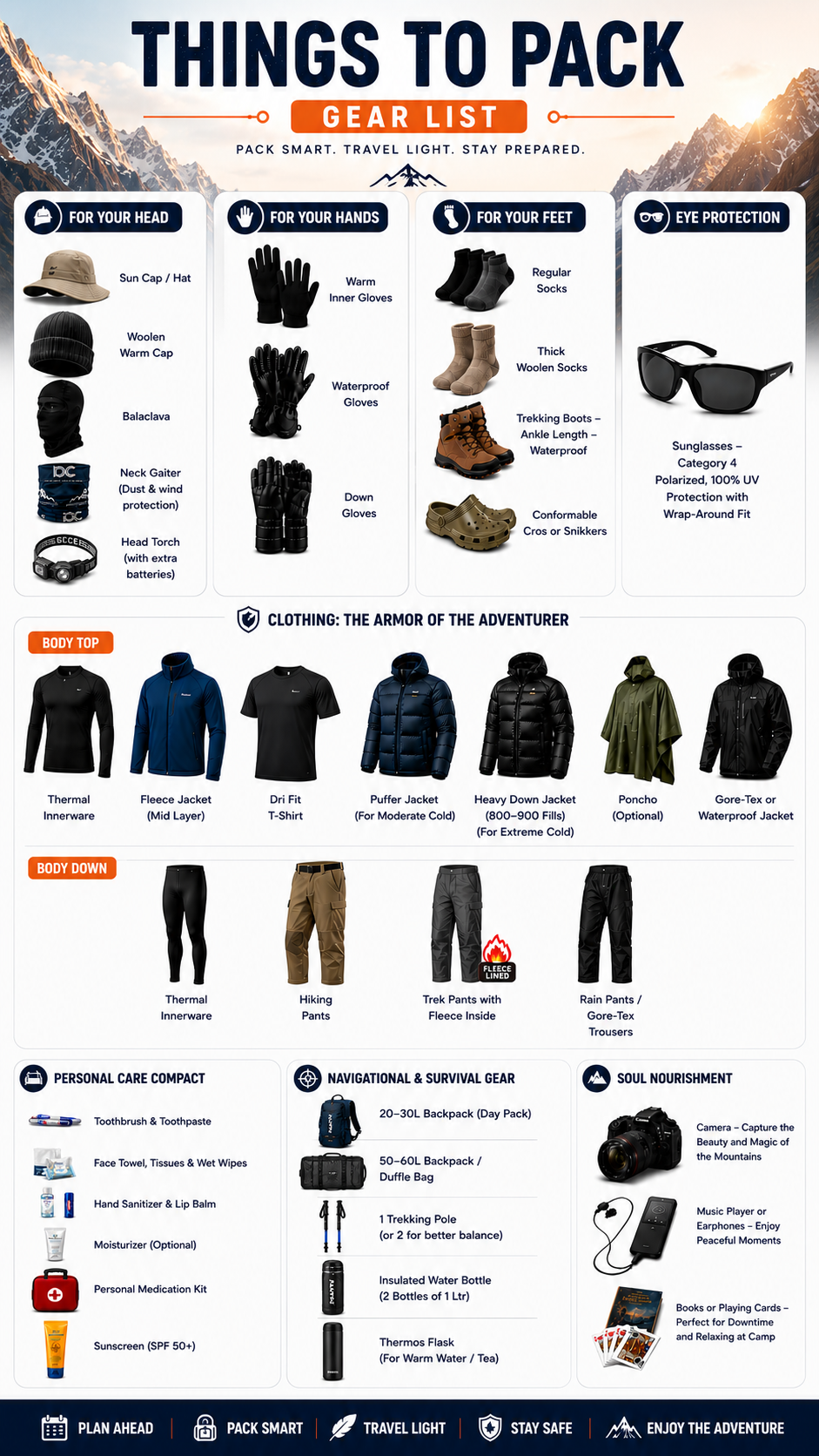
Pack layered clothing, including thermal base layers, insulating layers, a warm down jacket, and a waterproof and windproof outer shell.
Bring warm gloves, a hat, sunglasses, sun protection, and a suitable sleeping bag.
Carry a daypack, reusable water bottles, a headlamp, personal toiletries, and a basic first-aid kit.
Refer to the trek-specific packing list provided by Boots & Crampons before finalising your equipment.
Drink water regularly throughout the day.
Carry a personal water purification system and use it as directed.
Eat regular meals and carry suitable snacks for longer trekking days.
Avoid relying on thirst alone to determine when to drink.
Consult a healthcare professional before the trek if you have any medical concerns or are unsure whether high-altitude trekking is appropriate for you.
Carry your personal medication and inform the team about relevant medical requirements before departure.
Arrange comprehensive travel insurance covering high-altitude trekking and emergency evacuation.
Ensure your passport, visa, permits, and other required travel documents are in order.
Attend the pre-trek briefing and review the itinerary with your guide.
Check your equipment and ensure your footwear is comfortable.
Follow the training plan consistently rather than relying on last-minute preparation.
Be ready for a remote Himalayan journey where weather, terrain, and safety considerations may require changes to the planned schedule.

For rental bookings and additional equipment support, visit our contracted business partner — Summit Yak Official Website
The Manaslu Circuit Trek is a high-altitude trekking route that circles Mount Manaslu, the world’s eighth-highest mountain at 8,163 metres. The route passes through remote Himalayan villages, river valleys, forests, alpine landscapes, and traditional Buddhist settlements before crossing Larkya La Pass.
The highest point is Larkya La Pass at 5,106 metres. Crossing the pass is one of the most demanding sections of the trek and involves a long day of walking at high altitude.
The trek is rated Challenging. It involves consecutive days of walking, steep ascents and descents, remote trails, increasing altitude, and a demanding pass crossing. Good physical fitness and previous high-altitude trekking experience are strongly recommended.
The itinerary is planned for 15 days, including arrival in Kathmandu, road transfers, trekking, an acclimatisation day, and departure. The actual duration may vary if road conditions, weather, or safety considerations require adjustments.
The main trekking seasons are spring (March to May) and autumn (September to November). These periods generally offer favourable trekking conditions, although weather at higher elevations can change quickly. Snow and other adverse conditions may affect the crossing of Larkya La Pass.
Previous high-altitude trekking experience is strongly recommended. Participants should be comfortable walking for several consecutive days, managing steep ascents and descents, and spending time at high altitude. The Boots & Crampons team may assess participants’ experience and fitness before confirming suitability.
Walking times vary according to the day’s route and terrain. Most trekking days involve approximately 5–8 hours of walking. The crossing of Larkya La Pass may take approximately 8–10 hours or longer, depending on weather, trail conditions, and the group’s pace. These are estimates rather than guaranteed timings.
Yes. The itinerary includes an acclimatisation day at Sama Gaun. Depending on conditions and the group’s fitness, the planned hike may be towards Pungyen Gompa or Manaslu Base Camp. The final objective should be confirmed by the trekking guide, taking altitude and safety into account.
Yes. The trek requires restricted-area permits for the Manaslu region, along with applicable conservation-area and local permits for the confirmed route. Permit requirements and arrangements should be finalised by the trekking operator before departure.
Accommodation is planned in a hotel in Kathmandu and teahouses or lodges along the trekking route. Facilities become increasingly basic in remote and high-altitude settlements, and twin-sharing arrangements are subject to availability.
Breakfast, lunch, and dinner are included during the trekking period, based on the standard teahouse menu. Lunch and dinner in Kathmandu are excluded unless specifically stated in the package details. Special food orders and personal purchases may incur additional charges.
Water can generally be obtained at teahouses and designated stops, subject to availability and local charges. Carry a reusable bottle and a suitable water filter or purification tablets. Do not assume that untreated stream or tap water is safe to drink.
You should carry suitable trekking boots, layered clothing, a warm down jacket, waterproof outerwear, gloves, a sleeping bag, a daypack, a headlamp, sun protection, and personal essentials. A detailed packing list should be reviewed before departure. Sleeping bags and down jackets may be available for hire, subject to availability.
Yes. Comprehensive travel insurance covering high-altitude trekking, emergency medical treatment, and evacuation or helicopter rescue is strongly recommended. Check the policy’s altitude limits and exclusions carefully before travelling.
Road closures, adverse weather, and trail conditions can affect the itinerary. The guide and operations team may adjust the schedule when necessary for safety or logistical reasons. Additional accommodation, meals, transport, or other expenses caused by unforeseen delays may be payable by participants, in accordance with the trip terms.
Yes. A pre-trek briefing will cover the itinerary, equipment requirements, altitude awareness, safety procedures, and other essential preparations. Participants should review the packing list and raise any questions with the Boots & Crampons team before departure.
The Manaslu Circuit Trek offers spectacular Himalayan scenery, diverse landscapes, and cultural richness. With adequate preparation, pacing, and acclimatization, it’s one of the most rewarding treks in Nepal’s high mountains.
Boots & Crampons staff of highly trained professional guides is here to make your journey as safe and secure as possible. All of our trekking guides are medically certified and have abundant experience using their training in mountainous environments.
Our safety standards are based on the experiences of our founder, managing risk in some of the world’s most hostile environments.
While we advise our trekkers to carry light, our guides are always prepared with:
Be it queries about the trek, customization or anything else, our team is eager to assist you.
Need your questions answered right away?
Get in touch with us at
Discover similar treks from Boots & Crampons that quench your thirst for adventure.

Discover similar treks from Boots & Crampons that quench your thirst for adventure.