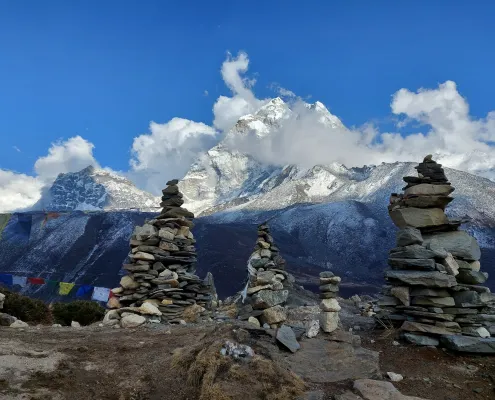
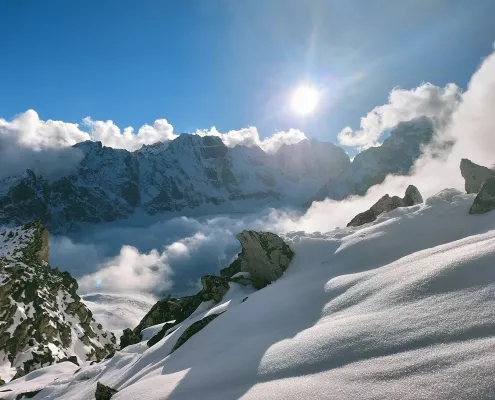
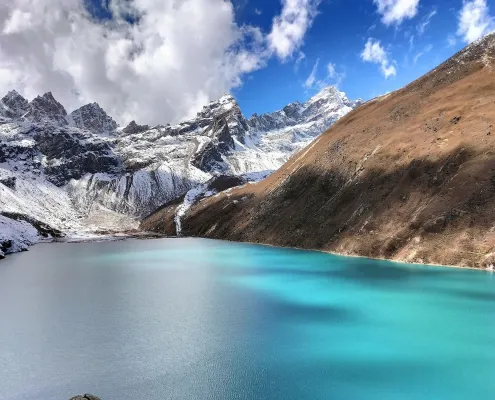
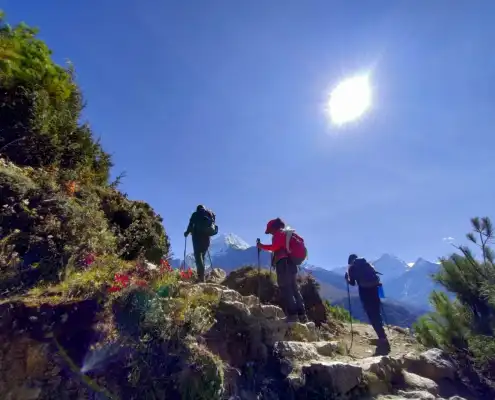
The Everest Base Camp + Gokyo Lakes Trek takes the classic Everest Base Camp experience a step further, combining the iconic Everest trail with remote valleys, turquoise glacial lakes and spectacular high-altitude viewpoints.
The journey begins in Kathmandu before flying to Lukla and following the traditional trail through Phakding, Namche Bazaar, Tengboche, Dingboche and Lobuche. Along the way, experience the culture of the Sherpa villages, cross suspension bridges over the Dudh Koshi River, visit ancient monasteries and gradually gain altitude towards the foot of the world’s highest mountain.
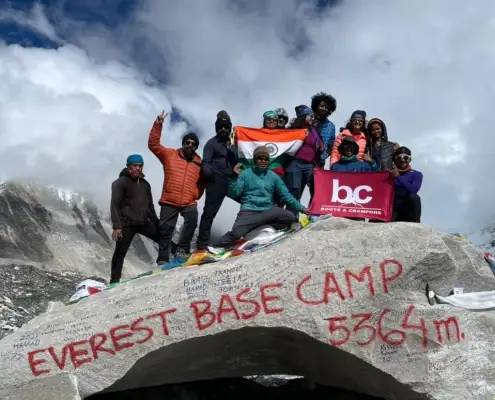
The trek takes you to Everest Base Camp (5,364 m), followed by an early morning ascent of Kala Patthar for spectacular views of Mount Everest and the surrounding Himalayan peaks.
The adventure then continues across the challenging Cho La Pass (approximately 5,420 m), connecting the Everest Base Camp trail with the beautiful Gokyo Valley. Cross the vast Ngozumpa Glacier and reach the stunning Gokyo Lakes, a series of high-altitude glacial lakes surrounded by towering Himalayan mountains.
One of the highlights is the ascent of Gokyo Ri (approximately 5,357 m), which offers an exceptional panorama of four 8,000-metre peaks – Everest, Lhotse, Makalu and Cho Oyu.
Compared with the standard Everest Base Camp trek, this route involves a longer journey, additional altitude exposure and more demanding terrain. The crossing of Cho La Pass requires careful movement over rocky, icy and potentially snow-covered sections.
This trek is ideal for experienced high-altitude trekkers looking for a more immersive Himalayan experience that combines the iconic Everest Base Camp route with the quieter and visually spectacular Gokyo Valley.
Note: Prices mentioned are applicable for Indian passport holders. For foreign passport holders, the cost may vary. Please connect with the Boots & Crampons team for clarity.
Note: An indemnity document will be shared before the trek. Signing it is mandatory.
Arrive at Tribhuvan International Airport and transfer to your hotel. Meet the team for a trek briefing, review the itinerary and check your equipment. The remainder of the day is available for rest or exploring the city.
Walking: No trekking planned.
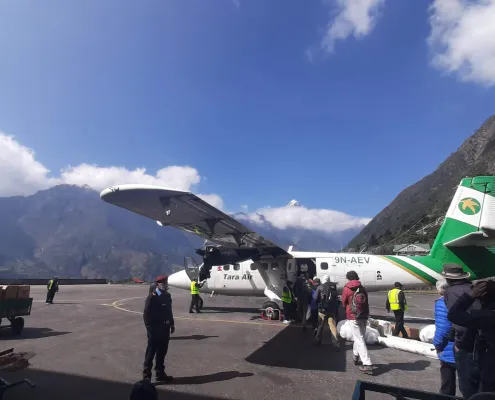
Travel to the departure airport as required by the flight schedule, then fly to Lukla. From Lukla, begin trekking along the Dudh Koshi River, crossing suspension bridges and passing traditional settlements before reaching Phakding or Ghat.
Trek distance: Approximately 8–9 km
Walking duration: Approximately 4–5 hours
Road transfer: If departing from Ramechhap, allow approximately 4–6 hours from Kathmandu, subject to traffic and road conditions.
Flights may operate from Kathmandu or Ramechhap depending on airline schedules and operational conditions. The exact arrangements will be confirmed before departure.
Follow the Dudh Koshi River through forested trails and suspension bridges. Enter Sagarmatha National Park, pass through Monjo and Jorsale, and begin the sustained ascent towards Namche Bazaar, the main trading centre of the Khumbu region.
Trek distance: Approximately 10–11 km
Walking duration: Approximately 6–8 hours
Spend the day acclimatising before gaining more altitude. Follow the planned acclimatisation route towards the Everest View Hotel area and visit the local museum, subject to the opening conditions. Return to Namche Bazaar for the night.
Trek distance: Approximately 4–6 km
Walking duration: Approximately 4–5 hours
The purpose of this day is to help the body adjust to altitude while allowing time to rest.
Continue along the trail towards Tengboche, climbing through the Khumbu landscape to the famous Tengboche Monastery. After the visit, descend through forested paths to Deboche for the overnight stay.
Trek distance: Approximately 10–11 km
Walking duration: Approximately 6–8 hours
Continue towards Dingboche, passing through traditional settlements and increasingly open high-altitude terrain. The route offers views of the surrounding Himalayan peaks as the vegetation becomes more sparse.
Trek distance: Approximately 9–10 km
Walking duration: Approximately 6–7 hours
Take an acclimatisation hike on the Nangarshang Peak above Dingboche, following the route. The ascent provides views of the surrounding peaks before returning to Dingboche for the night.
Trek distance: 4-5 kms overall
Walking duration: 5-7 hours
Nangarshang Peak is at an altitude of 5,055 m elevation and climbing the same helps in the acclimatisation process.
Continue through the high-altitude valley towards Lobuche. Pass the memorials dedicated to climbers who lost their lives in the Everest region and follow the rugged trail towards the settlement.
Trek distance: Approximately 7–8 km
Walking duration: Approximately 5–7 hours
Set out towards Gorakshep before continuing across rocky, glacial terrain to Everest Base Camp. Spend time at the base camp, conditions permitting, before retracing the route to Gorakshep for the night.
Trek distance: Approximately 10–11 km
Walking duration: Approximately 8–10 hours
The walking duration can vary considerably with weather, trail conditions, group pace and the time spent at base camp.
Begin early in the morning for the ascent towards Kala Patthar, one of the most celebrated viewpoints in the Everest region.
The climb rewards you with spectacular views of Mount Everest, Pumori, Nuptse and the surrounding Himalayan peaks.
After spending time at the viewpoint, descend to Gorakshep, collect your belongings and continue towards Dzongla through a scenic and less-travelled section of the trail.
This is a demanding day due to the early start, altitude and total walking hours.
Trekking Time: Approximately 7–8 hours.
Overnight: Teahouse in Dzongla.
Today is one of the most challenging and rewarding days of the trek.
Start early for the crossing of Cho La Pass, a high mountain pass connecting the Everest Base Camp trail with the Gokyo Valley.
The ascent involves steep and rocky sections, with possible snow and icy patches depending on the season. Take care while negotiating the pass and follow the trek leader’s instructions.
From the top, enjoy impressive views of the surrounding glaciers and mountains before beginning the descent towards Thangnak.
Trekking Time: Approximately 7–8 hours.
Overnight: Teahouse in Thangnak.
Continue towards the beautiful Gokyo Valley.
The route crosses the vast Ngozumpa Glacier, the longest glacier in Nepal, with a landscape of rocky moraine, glacial formations and spectacular mountain views.
After crossing the glacier, reach the Gokyo settlement beside the turquoise glacial lakes.
Spend the remainder of the day exploring the surroundings and resting.
Trekking Time: Approximately 6–7 hours.
Overnight: Teahouse in Gokyo.
Begin early for the ascent of Gokyo Ri, one of the finest viewpoints in the Khumbu region.
The climb is steep and demanding due to the altitude, but the summit offers an unforgettable panorama of four 8,000-metre peaks – Mount Everest, Lhotse, Makalu and Cho Oyu.
Enjoy the spectacular views of the Gokyo Lakes, Ngozumpa Glacier and surrounding Himalayan ranges before descending to Gokyo.
Trekking Time: Approximately 6–7 hours.
Overnight: Teahouse in Gokyo.
After breakfast, begin the descent from Gokyo towards Machermo.
Retrace the trail alongside the Gokyo Valley, passing glacial landscapes, yak pastures and alpine meadows. The route offers a different perspective of the mountains as you gradually lose altitude.
Trekking Time: Approximately 5.5–7 hours.
Overnight: Teahouse in Machermo.
Continue descending through the scenic Gokyo Valley towards Namche Bazaar.
Pass through traditional Sherpa settlements, waterfalls and forested sections before reconnecting with the main Everest trail.
Reach Namche Bazaar and enjoy a comfortable evening after completing the high-altitude section of the trek.
Trekking Time: Approximately 7–8 hours.
Overnight: Teahouse in Namche Bazaar.
Complete the final day of trekking.
Descend through familiar trails, crossing suspension bridges and passing through the villages along the Dudh Koshi River.
Reach Lukla and spend your final evening in the mountains with the team.
Trekking Time: Approximately 8–9 hours.
Overnight: Teahouse in Lukla.
Enjoy breakfast before heading to the airport for your flight home. Leave Nepal with unforgettable memories and the satisfaction of reaching Everest Base Camp.
This day is retained as a buffer for possible flight delays or itinerary disruptions. If it is not required as a buffer and the schedule permits, the team may arrange sightseeing in Kathmandu or Bhaktapur as specified in the package. A vehicle will be arranged for the team.
Important: Sightseeing is subject to the actual return schedule. Accommodation is included along with breakfast on this day but Lunch and Dinner is not included irrespective of the location you stay.
3 nights’ accommodation in Kathmandu at a 4-star category hotel on a twin-sharing basis, including breakfast.
Best available teahouse accommodation during the trek on a twin-sharing basis wherever possible.
Teahouses with attached washrooms will be provided where available. Attached washrooms are generally not available at remote high-altitude locations such as Lobuche and Gorakshep.
All meals during the trekking period: breakfast, lunch and dinner.
Participants may choose one standard menu item per meal. Additional items or personal orders will be charged separately.
Tea, coffee or hot beverages such as ginger-lemon-honey are included with meals during the trek.
Airport pick-up and drop-off services in Kathmandu.
Ground transfers between Kathmandu and Ramechhap via private vehicle, as required by flight operations.
Domestic flights between Ramechhap and Lukla, including applicable domestic airport taxes.
All transportation required as per the trekking itinerary.
Sagarmatha National Park Entry Permit.
Khumbu Region local permits.
All applicable trekking permits, entry fees and government taxes.
Experienced English-speaking trekking guides.
Porter and/or Yak support for carrying personal luggage, limited to 10 kg per participant.
Insurance coverage, wages, meals, accommodation and equipment for all Nepali support staff.
Complete trek coordination and logistics management by the Boots & Crampons expedition team.
Comprehensive first-aid medical kit carried by trek leaders and support staff.
Guidance and support for the Cho La Pass crossing, subject to weather and trail conditions.
Official Boots & Crampons expedition merchandise, including:
Duffel bag.
Buff.
T-shirt.
Finisher certificate.
Finisher medal.
Exclusive participant discount on Fast&Up nutrition products.
International airfare to and from Nepal.
Nepal entry visa fee.
Lunch and dinner in Kathmandu, except farewell dinner if included separately.
Mandatory personal travel insurance covering:
High-altitude trekking.
Emergency evacuation and helicopter rescue.
Medical treatment and hospitalisation.
Emergency evacuation costs, including helicopter rescue if required, are not included in the package.
Personal expenses including:
Bottled water, beverages and alcoholic drinks.
Specialty coffee, snacks and personal food purchases.
Phone calls, internet usage, battery charging and laundry.
Hot showers and other personal comfort services at teahouses.
Personal trekking gear, including:
Sleeping bag.
Down jacket.
Trekking shoes and clothing.
Trekking poles and other personal trekking equipment.
Gear can be hired upon request, subject to availability and additional charges.
Tips and gratuities for trekking guides, porters and support staff. These are customary but optional.
The following situations may incur additional costs and are not included:
Additional hotel stays in Kathmandu or Lukla due to flight delays, weather conditions or unforeseen circumstances.
Additional transportation costs due to itinerary changes or personal requests.
Room upgrades, early check-in or late check-out at hotels.
Costs arising from early departure from the trek due to personal reasons or medical evacuation.
Helicopter return requests during the trek.
Any deviation from the planned itinerary initiated by the participant.
No refunds will be provided for unused services once the trek has commenced.
Any service, activity or expense not explicitly mentioned in the Inclusions section will be considered excluded.
The Everest Base Camp + Gokyo Lakes Trek is a demanding high-altitude journey that combines the classic Everest trail with the remote Gokyo Valley and the crossing of Cho La Pass. The longer duration, repeated altitude exposure and challenging terrain require good physical conditioning and mental resilience.
Physical Fitness
Begin structured training at least 2–3 months before the trek.
Build cardiovascular endurance through jogging, cycling, swimming or brisk walking.
Include long hikes with elevation gain and progressively increase the duration and difficulty.
Develop leg strength through squats, lunges, step-ups and other lower-body exercises.
Include core-strength and stability exercises to improve balance on uneven terrain.
Practise uphill walking and stair climbing with a loaded backpack.
Prepare for consecutive days of walking, including long days of 7–9 hours.
Previous Experience
Previous high-altitude trekking experience is strongly recommended.
Participants should be comfortable walking for several hours on consecutive days.
Experience on rocky, uneven and snow-covered trails is beneficial.
Familiarity with steep ascents and descents will be useful while crossing Cho La Pass.
Participants should be comfortable with basic mountain living and limited facilities at high-altitude teahouses.
Mental Preparation
Be prepared for long trekking days, physical fatigue and changing weather conditions.
Maintain a steady pace and avoid rushing during ascents.
Be mentally prepared for the demanding Cho La Pass crossing.
Stay patient and flexible if weather or trail conditions require changes to the itinerary.
Follow the trek leader’s instructions and respect all safety decisions.
Acclimatisation and Health
Follow the acclimatisation schedule carefully and do not rush the ascent.
Maintain good hydration and eat regularly, even when appetite is reduced.
Inform the trek leader about any existing medical concerns or medication requirements before departure.
Understand the symptoms of altitude-related illness and report discomfort immediately.
Never ignore symptoms or continue ascending against the advice of the trek leader or medical personnel.
Final Preparation
Check all personal trekking clothing, footwear and equipment well before departure.
Ensure your trekking boots are comfortable, properly broken in and provide good grip.
Carry suitable layers for cold, wind, rain and possible snow conditions.
Ensure your insurance specifically covers high-altitude trekking and emergency evacuation.
Keep essential medication and personal documents accessible.
Attend all pre-trek briefings and complete the required documentation.
Proper preparation increases not just your chances of success, but also your safety and enjoyment in the mountains.

For rental bookings and additional equipment support, visit our contracted business partner — Summit Yak Official Website
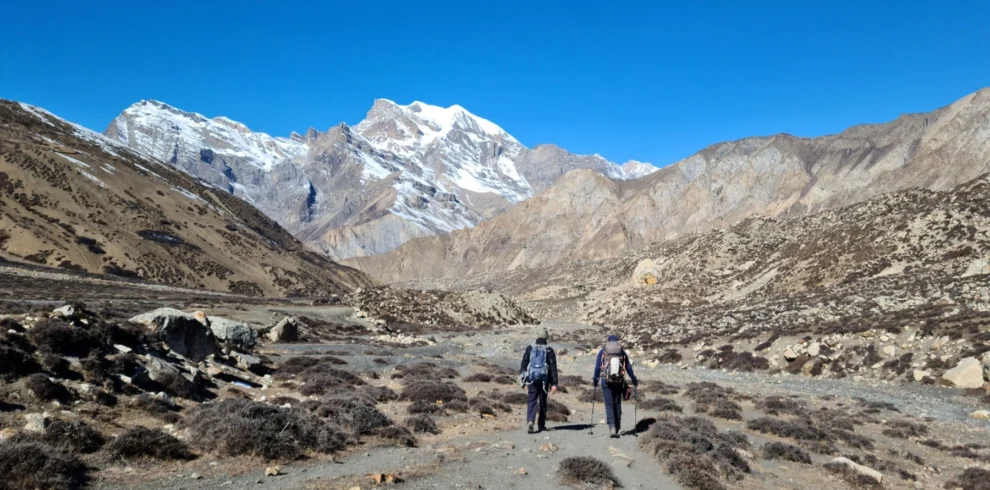
The trek includes well-defined mountain trails, suspension bridges, river crossings, rocky paths, glacial moraines, alpine meadows and high-altitude lake approaches. The route also crosses Cho La Pass, which can involve steep, rocky, icy and snow-covered sections depending on the season.
The main high points are:
Everest Base Camp: approximately 5,364 m.
Kala Patthar: approximately 5,550 m.
Cho La Pass: approximately 5,420 m.
Gokyo Ri: approximately 5,357 m.
The trek involves considerable time above 4,000 m, making proper acclimatisation essential.
The trek is graded Moderate – Difficult. It is more demanding than the standard Everest Base Camp route because of its longer duration, additional altitude exposure, repeated ascents and descents, and the crossing of Cho La Pass.
Good physical fitness and previous high-altitude trekking experience are strongly recommended.
The two main trekking seasons are:
Spring: April – May.
Autumn: September – October.
These periods generally offer favourable trekking conditions and clearer mountain views. Actual conditions can vary from year to year.
The current itinerary is 19 days, including arrival in Kathmandu, the trek, return to Kathmandu and final departure. Daily walking hours generally range from 5–9 hours, depending on the route and conditions.
Cho La Pass is one of the most challenging sections of this trek. The crossing involves steep ascents and descents, rocky terrain and potentially icy or snow-covered sections. An early start, appropriate footwear, steady pacing and following the trek leader’s instructions are important.
No formal mountaineering qualification is required for this trekking route. However, previous high-altitude trekking experience and comfort walking on uneven and potentially icy terrain are strongly recommended.
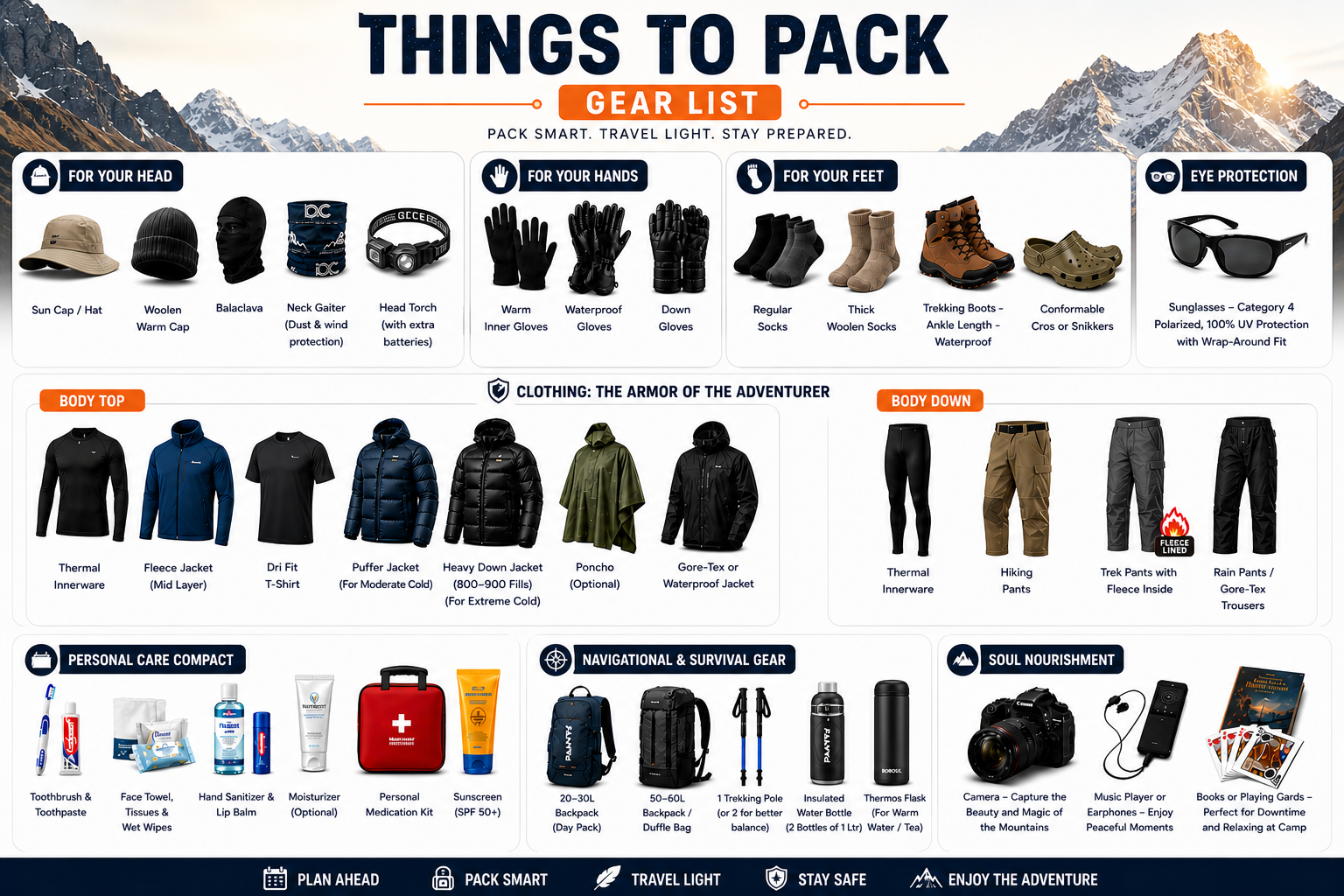
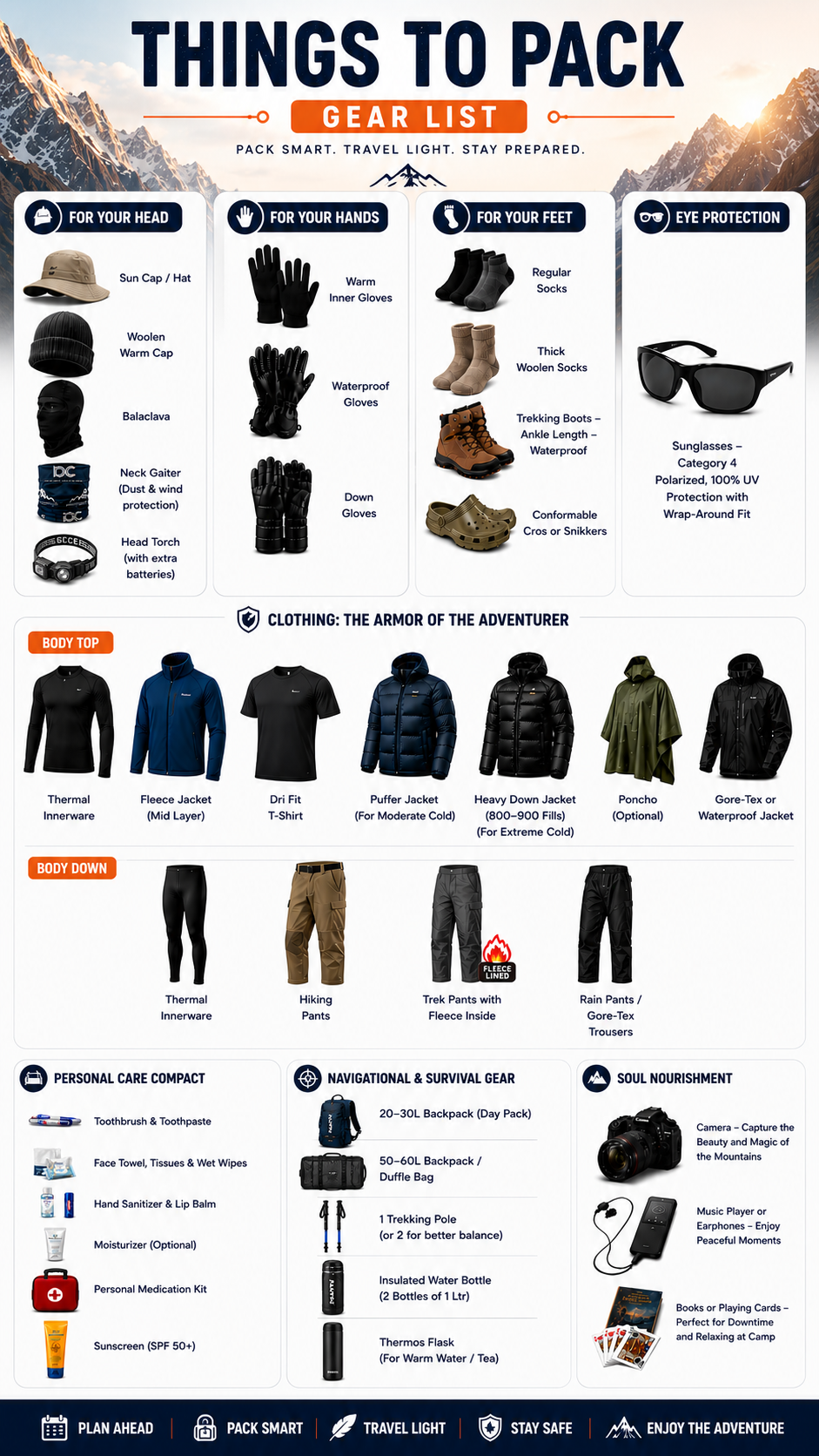
Essential items include comfortable trekking boots, warm layers, waterproof clothing, thermal wear, trekking poles, water bottles, sun protection and a suitable backpack. Refer to the Things to Pack section for the detailed checklist.
Water is available at teahouses and from natural sources, but it should be treated or purified before drinking. Carry a suitable water filter or purification tablets and follow the trek leader’s instructions.
Acclimatisation is built into the itinerary. Walk at a steady pace, stay hydrated, eat regularly and follow the trek leader’s instructions. Report symptoms such as headaches, nausea, dizziness or unusual breathlessness immediately.
Connectivity varies along the route. Some teahouses offer Wi-Fi and charging facilities for an additional fee, but mobile network and internet access may be limited or unavailable in remote sections.
A dedicated WhatsApp group will be created after registration for preparation and coordination.
Online briefing sessions may be conducted to explain the itinerary, equipment requirements, preparation and important travel information. Participants will also have an opportunity to clarify their queries.
This combined route offers the best of the Everest region – the iconic Everest Base Camp trail, the challenging Cho La Pass crossing, and the spectacular Gokyo Lakes. It demands thoughtful preparation, steady pacing and respect for altitude, but rewards trekkers with one of the most memorable Himalayan journeys.
This combined route offers diverse landscapes, iconic Himalayan vistas, high lakes, and cultural richness. It demands thoughtful preparation, steady pacing, and respect for altitude, but rewards trekkers with one of the most spectacular Himalayan experiences.
Boots & Crampons staff of highly trained professional guides is here to make your journey as safe and secure as possible. All of our trekking guides are medically certified and have abundant experience using their training in mountainous environments.
Our safety standards are based on the experiences of our founder, managing risk in some of the world’s most hostile environments.
While we advise our trekkers to carry light, our guides are always prepared with:
Be it queries about the trek, customization or anything else, our team is eager to assist you.
Need your questions answered right away?
Get in touch with us at
Discover similar treks from Boots & Crampons that quench your thirst for adventure.

Discover similar treks from Boots & Crampons that quench your thirst for adventure.