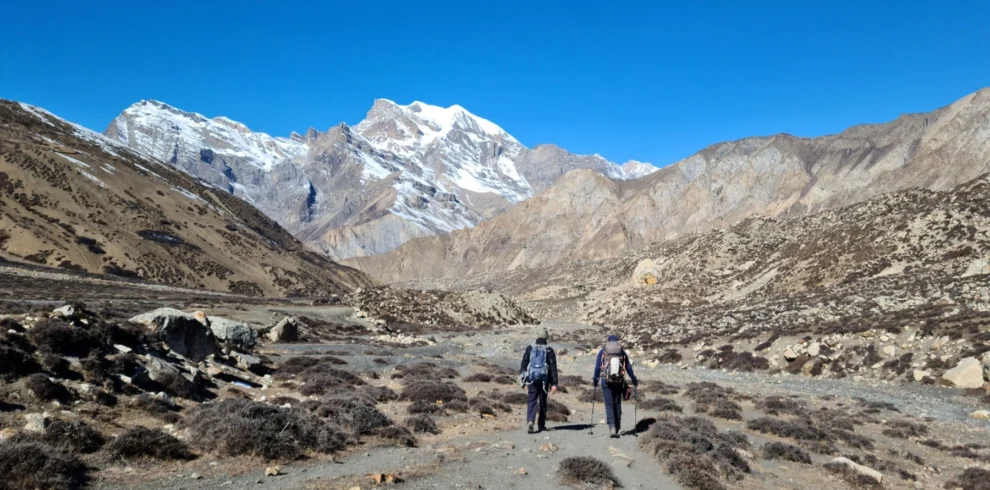
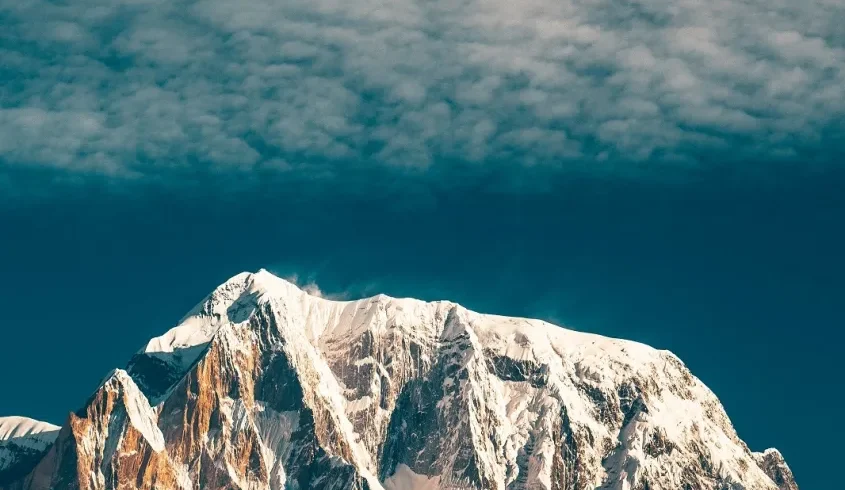
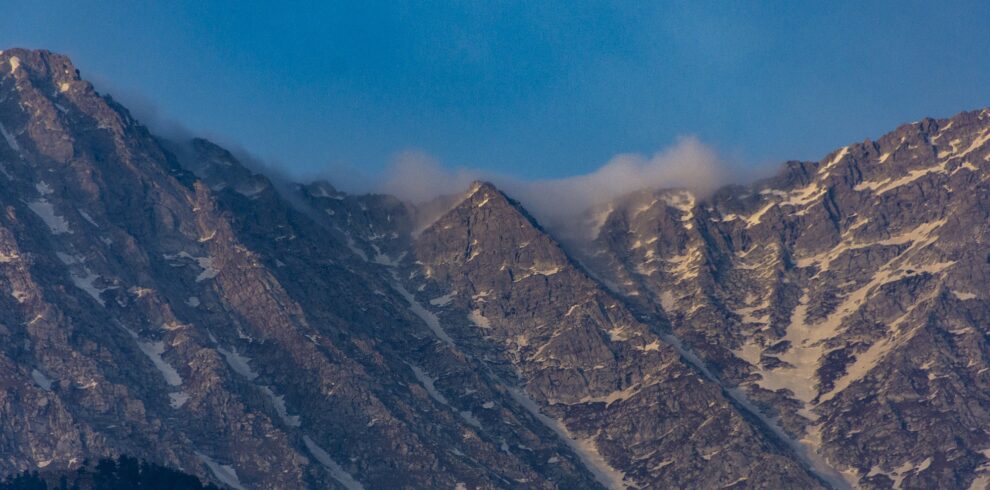
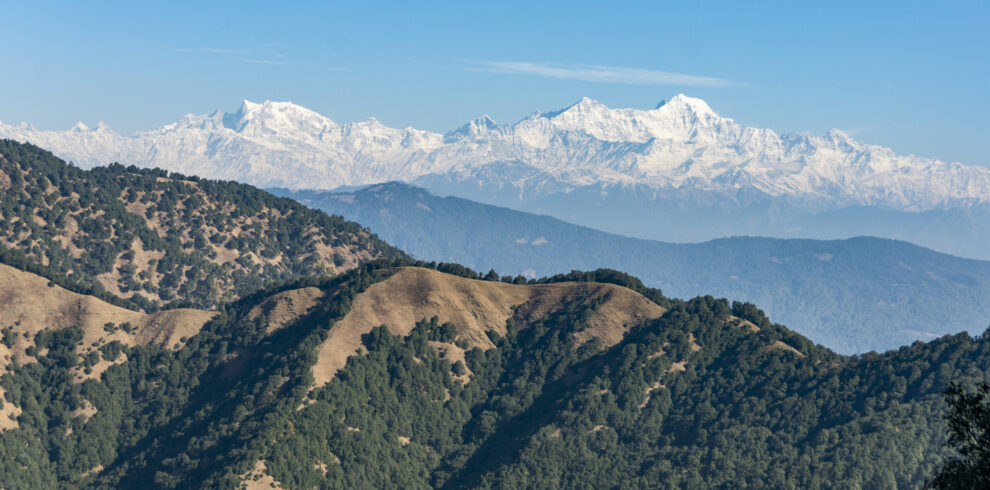
Often called the “Matterhorn of the Himalayas,” Ama Dablam (6,812 m) is one of the most iconic and technically challenging mountains in the world. Rising sharply above the Khumbu Valley, this peak is a true test of mountaineering skill, endurance, and mental control.
The expedition begins with the classic Everest approach before transitioning into a highly technical climb involving exposed ridges, steep ice walls, mixed rock sections, ladders, and fixed ropes. Camps are perched dramatically on narrow ridgelines, adding intensity and exposure at every stage. The famous Yellow Tower, Mushroom Ridge, and summit ridge provide some of the most demanding climbing sections in the Himalayas.
Summit day is long and committing, requiring excellent rope management skills, confidence on exposed terrain, and the ability to perform under extreme altitude and exposure. Views from the summit include Everest, Lhotse, Makalu, and the entire Khumbu region.
Ama Dablam is not a beginner’s peak. It is meant for experienced climbers with a strong technical background who want to take on one of the world’s most prestigious alpine objectives.
Note: Prices mentioned are applicable for Indian passport holders. For foreign passport holders, the cost may vary. Please connect with the Boots & Crampons team for clarity.
Note: An indemnity document will be shared before the expedition. Signing it is mandatory.
Explore the comprehensive metrics of the climb, including altitude changes, climb duration, route specifics, distance, and more. Recorded on Garmin during our 2024 expedition to Island Peak and Ama Dablam (in that order), this data provides an in-depth analysis of what happens on ground zero, helping you prepare better. Click here to explore the data.
Upon arrival in Kathmandu, you will be welcomed and transferred to your hotel. After settling in, there will be a brief introduction to the expedition, providing important information about the days ahead. You will also have some free time to explore the surroundings or relax.
Overnight: Hotel in Kathmandu.
Today, you will attend the formal briefing at the Department of Tourism regarding the expedition’s guidelines and regulations.
Afterward, embark on a sightseeing tour of Kathmandu, visiting some of its famous landmarks and cultural sites, such as Swayambhunath Stupa, Boudhanath Stupa, and Pashupatinath Temple.
Overnight: Hotel in Kathmandu.
In the morning, take a scenic flight to Lukla, the gateway to the Khumbu region.
Upon arrival, begin the trek towards Phakding. The route follows beautiful pine forests, traditional Sherpa villages, and the Dudh Koshi River, offering scenic views of the surrounding landscape.
Overnight: Lodge in Phakding.
Today, trek from Phakding to Namche Bazaar, the bustling hub of the Khumbu region.
Cross several suspension bridges and walk through forests of rhododendron and pine. The ascent becomes steeper as you approach Namche Bazaar, with beautiful mountain views along the way.
Overnight: Lodge in Namche Bazaar.
An important acclimatisation day to help your body adjust to the increasing altitude.
Take a short hike around Namche to gain some altitude before returning to rest. You may also explore the local market, interact with the Sherpa community, or visit the Everest View Hotel for panoramic views of Mount Everest and the surrounding peaks.
Overnight: Lodge in Namche Bazaar.
Trek from Namche towards Tengboche, following a scenic trail through the Khumbu region.
The route offers breathtaking views of Everest, Lhotse, and Ama Dablam. On reaching Tengboche, visit the famous Tengboche Monastery, one of the most important Buddhist monasteries in the region.
Overnight: Lodge in Tengboche.
Continue towards Pangboche, a traditional Sherpa village located beneath the towering peaks of Ama Dablam and Everest.
The trail passes through beautiful alpine forests and offers impressive views of the surrounding mountains. You can also visit the ancient Pangboche Monastery, known for its peaceful atmosphere and cultural significance.
Overnight: Lodge in Pangboche.
Today, trek towards the iconic Ama Dablam Base Camp.
The route gradually leaves the traditional trekking trail and enters more rugged mountain terrain. On reaching Base Camp, settle into the expedition camp and take in the impressive views of Ama Dablam.
The remainder of the day is dedicated to settling in and preparing for the climbing phase.
Overnight: Expedition camp at Ama Dablam Base Camp.
These days are dedicated to acclimatisation and preparation for the climb.
You will undertake light acclimatisation hikes and rest periods to allow your body to adjust to the altitude. A traditional Puja ceremony will be organised at Base Camp, seeking blessings for a safe expedition.
Technical training sessions will focus on the skills required for the ascent, including:
Ice axe handling.
Crampon techniques.
Fixed-rope climbing and descending.
Ascender and descender use.
Harness and carabiner systems.
Rope management and safe movement on exposed terrain.
The climbing Sherpa team will also brief participants on the route, camp progression, and summit-day procedures.
Overnight: Ama Dablam Base Camp.
This period is dedicated to the technical ascent of Ama Dablam.
The team will follow a planned climbing schedule involving acclimatisation rotations, load carries, and the establishment of higher camps.
The climb generally progresses through the following stages:
Camp 1: The route involves exposed rocky terrain and sections requiring fixed-rope movement. Climbers must be comfortable with technical rock and mixed-terrain climbing.
Camp 2: The ascent becomes more demanding, with exposed ridgelines and technical rock sections. The famous Yellow Tower is among the key challenges on this section of the mountain.
Higher Camp / Summit Camp: The route continues over steep snow and ice terrain towards the upper mountain. Mushroom Ridge and the summit ridge require careful movement, efficient rope management, and sound technical judgement.
The exact number of rotations, time spent at each camp, and summit schedule will depend on weather, snow and ice conditions, and the team’s progress.
Overnight: Base Camp and higher camps, according to the climbing rotation schedule.
After the summit attempt and completion of the climbing phase, descend to Ama Dablam Base Camp.
The descent requires careful movement on fixed ropes and exposed sections. On reaching Base Camp, rest, recover, and celebrate the completion of the climbing phase.
Overnight: Ama Dablam Base Camp.
Begin the return journey from Base Camp towards Lukla, retracing the route through the Khumbu region.
On reaching Lukla, board the scheduled flight to Kathmandu, subject to weather and operational conditions.
Overnight: Hotel in Kathmandu.
After breakfast, transfer to Tribhuvan International Airport for your onward journey.
The Ama Dablam expedition concludes with memories of one of the most challenging and rewarding technical climbs in the Himalayas.
3 nights’ accommodation in a 4-star category hotel in Kathmandu on a twin-sharing basis, including breakfast.
Best available teahouse accommodation during the approach trek on a twin-sharing basis, wherever possible.
All meals during the trekking phase, including breakfast, lunch, and dinner. Standard menu items are included; additional personal orders will be charged separately.
Full-board expedition meals during the climbing phase, including freshly prepared breakfast, lunch, dinner, and hot beverages at Base Camp and higher camps.
Ama Dablam climbing permit.
All required trekking permits and national park entry fees.
Summit route fixing charges.
Garbage management and disposal fees.
Government taxes and official expedition documentation.
Liaison and administrative assistance for permits and expedition paperwork.
Round-trip Kathmandu–Lukla–Kathmandu flight tickets.
International and domestic airport pick-up and drop-off in Kathmandu.
Transportation of expedition equipment, supplies, and staff throughout the expedition.
One professional and experienced Climbing Sherpa per member, including:
Salary and equipment allowance.
Insurance coverage.
Daily wages and load-carrying support.
Experienced Base Camp staff, including:
Expedition Sirdar.
Professional cook and kitchen staff.
Expedition support crew.
Porters for transportation of expedition equipment and personal gear, up to 30 kg per member, between Lukla and Base Camp.
Full insurance coverage (medical, accident, and helicopter rescue insurance) for all Nepali expedition staff.
Individual sleeping tent, mattress, and pillow for each participant at Base Camp.
Complete Base Camp setup, including:
Dining tent.
Kitchen tent.
Toilet tent.
Shower tent.
Tables, chairs, and essential camp infrastructure.
High-altitude expedition infrastructure and equipment, including:
High-altitude tents.
Climbing ropes and fixed-line infrastructure.
Cooking equipment, gas, and burners.
High-altitude food supplies.
Walkie-talkie communication systems.
Satellite phone access for emergency communication.
Weather forecast support throughout the expedition.
Comprehensive expedition first-aid medical kits.
Coordination support for emergency rescue arrangements, if required.
Welcome dinner in Kathmandu.
Boots & Crampons expedition duffel bag.
Exclusive participant discount on Fast&Up nutrition products.
Complete expedition management and coordination by the Boots & Crampons team.
International airfare to and from Nepal.
Nepal entry visa fees.
Mandatory personal travel insurance covering:
High-altitude climbing.
Emergency evacuation.
Medical treatment.
Trip interruption or cancellation.
Emergency evacuation costs, including helicopter rescue if required.
Important: Participants must have insurance that explicitly covers technical mountaineering at 6,800 m and helicopter evacuation in Nepal. Standard trekking insurance may not be sufficient.
Personal trekking and climbing equipment, including:
Mountaineering boots.
Sleeping bag.
Down clothing and personal gear.
Technical climbing equipment, unless specifically stated as provided.
Gear rental assistance can be provided upon request.
Lunch and dinner in Kathmandu, except the welcome dinner.
Personal expenses, including:
Phone calls.
Internet usage.
Battery charging.
Laundry.
Alcoholic beverages.
Specialty drinks and snacks.
Summit bonus for the Climbing Sherpa: INR 50,000 per Sherpa.
Tips and gratuities for expedition staff.
Personal porter services beyond the standard allocation.
Drone permits, filming permits, or special media permits.
Ski permits or special expedition permits, if applicable.
Helicopter services not included in the planned expedition itinerary.
Additional costs arising due to:
Weather delays.
Flight delays or cancellations.
Political unrest.
Natural disasters.
Personal health issues or early descent.
Any service, facility, or expense not explicitly mentioned in the Inclusions section will be considered excluded.
At Boots & Crampons, preparation is not optional. Ama Dablam is a highly technical mountaineering expedition that demands extensive high-altitude experience, excellent physical conditioning, and strong technical climbing skills.
Physical Fitness
Follow a structured strength and endurance training programme for several months before the expedition.
Build excellent cardiovascular endurance through regular long-distance jogging, cycling, and sustained aerobic exercise.
Include uphill hikes with a heavily loaded backpack to prepare for long approaches and high-altitude load carries.
Focus on leg strength through squats, lunges, step-ups, and other stability exercises.
Develop strong core strength through planks, crunches, and functional stability training.
Prepare for consecutive days of demanding physical activity at high altitude.
Previous Experience
Extensive high-altitude trekking and mountaineering experience is mandatory.
Previous successful climbs of 6,000 m peaks are strongly recommended.
Prior experience on technical alpine or Himalayan routes is essential.
Participants must be proficient in fixed-rope climbing and descending, ascender and descender use, and rope management.
Experience with rock climbing, ice climbing, crampons, and ice axe techniques is expected.
Selection for this expert-level expedition is at the discretion of Boots & Crampons.
Technical Preparation
Be comfortable moving on steep rock, snow, and ice terrain.
Practise ascending and descending fixed ropes using appropriate climbing systems.
Develop confidence in clipping, unclipping, and managing carabiners and safety systems.
Be familiar with crampon techniques and ice axe use on steep slopes.
Understand the importance of safe movement on exposed ridges and narrow mountain sections.
Attend all technical briefings and training sessions organised by the expedition team.
Mental Preparation and Altitude
Develop the mental resilience required for long, exposed, and physically demanding climbing days.
Be prepared for cold temperatures, limited facilities, and prolonged periods at high altitude.
Maintain patience and discipline during acclimatisation rotations and changing weather windows.
Follow the expedition leader and climbing Sherpa’s instructions at all times.
Understand that safety decisions, including turning around or cancelling a summit attempt, must be respected.
Final Preparation
Ensure all personal climbing equipment is suitable for a technical 6,800 m expedition.
Check the compatibility and condition of mountaineering boots, crampons, harness, helmet, and other technical equipment.
Train with the actual equipment and clothing intended for the expedition.
Complete all required medical assessments and insurance arrangements before departure.
Follow the final equipment checklist and expedition guidance shared by Boots & Crampons.
Proper preparation increases not just your chances of success, but also your safety and enjoyment in the mountains.
Ama Dablam involves steep rock sections, exposed ridgelines, snow and ice slopes, fixed ropes, ladders, and glacier travel. This is a highly technical Himalayan expedition requiring confident movement on mixed terrain.
Ama Dablam stands at 6,812 m (22,349 ft). The challenge lies not only in altitude but also in technical climbing, exposure, and sustained time spent above 5,500 m.
Yes. Ama Dablam is a technical mountaineering expedition. Climbers must be proficient with:
This expedition is not suitable for first-time climbers.
The best climbing seasons are:
Weather windows are short, and flexibility is critical.
The expedition typically lasts 25–30 days, including acclimatization and buffer days. Climbers spend multiple nights above 5,700 m, making altitude management a key factor.
Ama Dablam is suitable only for experienced mountaineers with:
Detailed fitness and preparation requirements are outlined in the Trek Preparation Guide.
Participants are expected to follow a long-term, structured training plan covering strength, endurance, and technical skills.
Please refer to the Trek Preparation Guide for complete preparation details.
Accommodation includes lodges during the approach trek and tents at Base Camp and higher camps. Conditions at altitude are cold, exposed, and minimal, typical of Himalayan expeditions.
Water is obtained from glacial streams and snow melt. The expedition team treats water, but climbers should carry personal purification tablets or filer water bottles as backup
Ama Dablam is a climb of precision, patience, and discipline.
Proper preparation and honest self-assessment are non-negotiable.
Participants are strongly advised to review the Preparation Guide carefully and ensure they meet the experience and fitness expectations before registering.
Boots & Crampons staff of highly trained professional guides is here to make your journey as safe and secure as possible. All of our trekking guides are medically certified and have abundant experience using their training in mountainous environments.
Our safety standards are based on the experiences of our founder, managing risk in some of the world’s most hostile environments.
While we advise our trekkers to carry light, our guides are always prepared with:
Be it queries about the trek, customization or anything else, our team is eager to assist you.
Need your questions answered right away?
Get in touch with us at
Discover similar treks from Boots & Crampons that quench your thirst for adventure.

Discover similar treks from Boots & Crampons that quench your thirst for adventure.